
Lithium-ion batteries have become an essential part of modern working life. They power everything from cordless tools, laptops and mobile devices to scanners, cleaning equipment and other rechargeable workplace equipment.
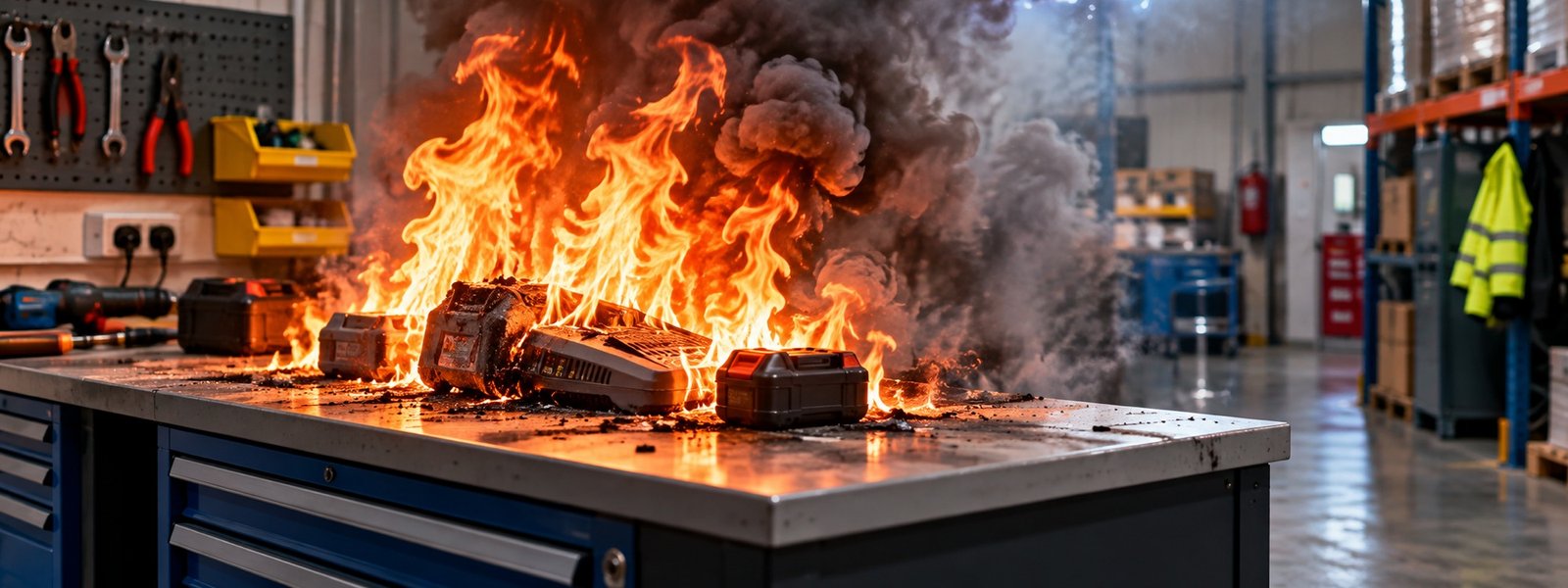
Although lithium-ion batteries are generally reliable when used correctly, charging damaged, defective, overheated or unsuitable batteries can present a serious fire risk. A battery failure can develop rapidly, potentially resulting in intense heat, fire, smoke and the involvement of nearby batteries or combustible materials.
For businesses that regularly charge multiple batteries, having suitable procedures and dedicated lithium battery safety products can significantly improve workplace preparedness and help reduce the consequences of a battery incident.
Spilltek’s range of lithium battery safety products provides practical solutions for businesses looking to create safer areas for battery charging, storage and emergency response.
Why Can Lithium-Ion Batteries Catch Fire?
Lithium-ion batteries store a considerable amount of energy within a relatively compact package. If a battery is damaged, incorrectly charged, exposed to excessive heat or develops an internal fault, there is a risk of thermal runaway.
Thermal runaway occurs when rising temperatures within a battery trigger reactions that generate further heat. If the process continues, the battery can vent hot gases, ignite or, in some circumstances, contribute to neighbouring cells becoming involved.
Potential warning signs of a battery problem can include unusual heat, swelling, deformation, leaking, unusual smells, hissing or other abnormal behaviour.
A battery showing signs of damage or failure should not simply be placed back on charge.
Charging Batteries in the Workplace
Many workplaces charge lithium-ion batteries every day without giving much thought to where charging takes place.
Cordless tool batteries may be left charging on workshop benches, while laptops, scanners and other devices may be charged alongside paperwork, packaging and other combustible materials.
The risks can increase where numerous batteries are being charged together or equipment is left charging without appropriate supervision or controls.
Businesses should assess their particular battery-charging activities and consider the type and quantity of batteries, charging location, surrounding materials and potential consequences if a battery fails.
Dedicated Lithium-Ion Battery Charging Cabinets
One way businesses can improve battery-charging arrangements is by creating a dedicated location for rechargeable batteries.
Lithium-ion battery charging cabinets provide an organised area in which batteries and chargers can be kept together rather than being distributed across benches, desks or other unsuitable locations.
Depending on the model and specification, specialist cabinets can incorporate features intended to support safer battery charging and storage.
They can be particularly useful in warehouses, factories, workshops, construction facilities, maintenance departments and other workplaces where significant numbers of rechargeable tool or equipment batteries are used.
Fire Suppression Battery Charging Lockers
For organisations looking for additional protection, Spilltek’s range can include battery charging lockers with fire-suppression features.
Creating individual charging compartments can help businesses organise batteries and charging equipment while reducing reliance on improvised charging areas.
These types of solutions are particularly relevant for workplaces where batteries represent an important part of daily operations, such as distribution centres using rechargeable scanners or industrial environments with large fleets of cordless tools.
The appropriate charging solution should always be selected according to the batteries, chargers and risks present within the individual workplace.
Lithium Battery Fire Blankets
Spilltek’s lithium battery safety range also includes specialist products intended to support emergency response.
Lithium battery fire blankets can provide an additional tool for trained personnel responding to certain battery incidents. Their suitability, limitations and deployment procedures should be understood in advance and incorporated into the organisation’s emergency planning rather than relying on a blanket as the sole fire-control measure.
The priority in any battery fire remains protecting people and following the site’s emergency and evacuation procedures.
Safe Storage Is Just as Important as Safe Charging
Lithium-ion battery safety does not end when charging is complete.
Spare, damaged and replacement batteries should be stored appropriately and protected from conditions that could increase the likelihood of damage or failure.
Businesses should also have procedures for identifying and isolating batteries that have been dropped, crushed, swollen, overheated or otherwise damaged. Suspect batteries should not simply be returned to normal storage or placed back on charge.
Providing dedicated storage and quarantine arrangements can therefore form an important part of a wider lithium battery safety strategy.
Reduce the Risk Before an Incident Happens
The consequences of a lithium-ion battery fire can extend well beyond the battery itself.
A fire can potentially damage machinery, stock, vehicles, tools, IT equipment and buildings, while smoke and heat can make surrounding areas unsafe. A serious incident can also lead to operational disruption and potentially substantial repair and replacement costs.
The most effective approach is therefore to consider the risks before an incident occurs.
Good battery management can include using compatible chargers, inspecting batteries for damage, keeping charging areas clear of unnecessary combustible materials, following manufacturers’ instructions, training relevant employees and establishing appropriate emergency procedures.
Specialist lithium-ion battery charging and safety equipment can complement these measures.
Lithium Battery Safety Products from Spilltek
As workplaces become increasingly dependent on rechargeable equipment, managing lithium-ion battery risks is becoming an important part of workplace fire safety.
Spilltek offers a range of lithium battery safety products designed to help businesses improve how batteries are charged, stored and managed. From dedicated battery charging cabinets and fire-suppression charging lockers to specialist fire-safety and containment products, the range can form part of a more comprehensive approach to lithium-ion battery safety.
No single product can eliminate the risk of lithium-ion battery fires. However, combining appropriate charging and storage equipment with good working practices, battery inspection, staff training and emergency planning can significantly reduce avoidable risks and improve preparedness should a battery fail.
Don’t wait for a damaged battery to highlight weaknesses in your charging arrangements. Review how lithium-ion batteries are charged and stored in your workplace and explore Spilltek’s range of lithium battery safety solutions.